Ready to transform your entryway? This guide, focused on “How to Make a Entryway Coat Rack with a Shelf,” will walk you through crafting a functional and stylish coat rack. From planning and design to the final installation, you’ll learn the essential steps to build a custom piece that perfectly fits your space and needs. Get ready to unleash your inner DIY enthusiast and create a welcoming entrance for your home!
We’ll cover everything from selecting the right materials and tools to mastering the cutting and assembly process. You’ll discover how to choose the perfect wood type, understand hook placement, and apply finishes that enhance the rack’s beauty and durability. Whether you’re a seasoned woodworker or a complete beginner, this guide offers clear, concise instructions and helpful tips to ensure your project’s success.
Planning and Design Considerations
Before you start building your entryway coat rack, careful planning is crucial for a functional and aesthetically pleasing result. This involves determining the right dimensions, considering your entryway’s size, and deciding on the design elements that best suit your needs. Taking the time to plan will prevent costly mistakes and ensure you create a coat rack that perfectly fits your space and lifestyle.
Desired Dimensions of the Entryway Coat Rack
The dimensions of your coat rack will depend on the available space in your entryway and your storage needs.Consider these dimensions as a starting point:
- Height: Aim for a height of around 6 to 7 feet (72 to 84 inches). This allows for comfortable reach for most adults while providing sufficient space for hanging coats, hats, and other items. The bottom of the shelf should be high enough to clear the heads of people walking underneath, usually around 6 feet (72 inches) from the floor.
- Width: The width will vary depending on the number of hooks and the available wall space. A typical width might range from 2 to 4 feet (24 to 48 inches). Measure the wall space available in your entryway to determine the maximum width you can accommodate.
- Shelf Depth: The shelf depth should be sufficient to hold common items like keys, wallets, and small decorative objects. A depth of 6 to 10 inches is usually adequate. Consider the types of items you plan to store on the shelf when deciding on the depth. A deeper shelf will offer more storage but might protrude further into the entryway.
Optimal Coat Rack Sizes for Common Entryway Sizes
Entryway sizes can vary significantly, so tailoring the coat rack dimensions to the available space is essential.Here are some suggested coat rack sizes for different entryway sizes:
- Small Entryway (3-4 feet wide): A compact coat rack, perhaps 2 to 3 feet wide, with a shelf depth of 6-8 inches. Consider a minimalist design with fewer hooks.
- Medium Entryway (4-6 feet wide): A coat rack 3 to 4 feet wide with a shelf depth of 8-10 inches. This allows for more hooks and shelf space.
- Large Entryway (6 feet or wider): A more substantial coat rack, potentially 4 feet or wider, with a shelf depth of 10 inches or more. You can include more hooks, a larger shelf, and even add a bench below for seating and shoe storage.
Determining the Ideal Number of Hooks
The number of hooks you need depends on the number of people in your household and the typical number of coats and accessories each person owns.Consider these factors:
- Household Size: For a single person, 3-4 hooks might suffice. For a family of four, you’ll likely need 8-12 hooks or more.
- Seasonal Needs: Account for seasonal items like winter coats, scarves, and umbrellas.
- Guest Usage: Consider the need for extra hooks for guests.
- Spacing: Space hooks evenly along the rack, typically 4-6 inches apart, to avoid overcrowding.
As an example, a family of four, each with two coats, a hat, and a scarf, might need at least 12 hooks. If you frequently host guests, adding a few extra hooks is a good idea.
Coat Rack Concepts with Varying Shelf Styles
Different shelf styles can dramatically change the look and functionality of your coat rack.Here are a few design concepts:
- Floating Shelf: A clean, modern design where the shelf appears to float on the wall. This style is often achieved by using hidden brackets. The shelf can be made from various materials like wood or even metal. This design creates a minimalist and airy feel, ideal for smaller entryways.
- Slatted Shelf: A shelf made of parallel wooden slats. This design allows for some airflow and adds a rustic or contemporary touch, depending on the wood and finish used. The gaps between the slats can be used to hang items as well, offering added versatility.
- Solid Shelf: A traditional design with a solid shelf made of wood or other materials. This style provides a substantial surface for storage and can be easily customized with paint or stain. This is a very functional option.
Each style offers a unique aesthetic and level of functionality, so consider your entryway’s style and storage needs when making your choice.
Materials and Tools
Building a coat rack with a shelf requires the right materials and tools to ensure a sturdy and aesthetically pleasing final product. This section provides a comprehensive guide to help you gather everything you need before you begin. It covers wood types, hardware, hook options, and the essential tools for the job, along with important safety considerations.
Materials List
To build your entryway coat rack, you’ll need the following materials. Carefully consider the dimensions of your desired coat rack and adjust the quantities accordingly.
- Wood for the Shelf and Backing: This is the main structural component. Choose a wood type that suits your style and budget. The dimensions will depend on your design, but typically, you’ll need a board for the shelf and another for the backing. Consider a width of 6-8 inches for the shelf and a similar width for the backing. The length depends on how wide you want your coat rack to be.
- Wood for the Coat Rack Supports (Optional): If you’re adding decorative supports, you’ll need additional wood.
- Coat Hooks: Select hooks based on your preferred style and the weight you expect the coat rack to bear. Consider the spacing between hooks.
- Screws: Various sizes are needed for different purposes:
- Wood screws for attaching the shelf, backing, and supports.
- Screws for mounting the hooks.
- Screws for attaching the coat rack to the wall.
- Wall Anchors: These are crucial for securely mounting the coat rack to the wall, especially if you can’t hit a stud. Choose anchors appropriate for the weight of the coat rack and the items it will hold.
- Wood Glue: This adds extra strength to joints.
- Finishing Supplies: Stain, paint, varnish, or sealant, depending on your desired finish.
- Sandpaper: Various grits for smoothing the wood.
Wood Type Comparison
Choosing the right wood type is essential for both aesthetics and durability. Here’s a comparison of common wood options:
| Wood Type | Cost (per board foot) | Durability | Suitability for this Project |
|---|---|---|---|
| Pine | $3 – $7 | Moderate; prone to dents and scratches | Good for beginners; affordable and easy to work with. May require more careful handling and finishing. |
| Oak | $6 – $12 | High; very durable and resistant to wear | Excellent choice; strong and long-lasting. Takes stain well. |
| Maple | $7 – $15 | High; very hard and durable | Excellent choice; similar to oak in durability. Can be more challenging to work with due to its hardness. |
| Reclaimed Wood | Varies greatly; often $5 – $20+ | Varies depending on the source | Offers a unique, rustic look. May require extra preparation (cleaning, removing nails). The price is variable. |
Tools Required
Having the right tools will make the construction process smoother and safer. Here’s a list of essential tools:
- Measuring Tools:
- Tape measure: For accurate measurements.
- Pencil: For marking cuts and locations.
- Level: To ensure the coat rack is mounted straight.
- Cutting Tools:
- Saw (hand saw, circular saw, or miter saw): For cutting the wood to the correct dimensions. A circular saw or miter saw will provide cleaner and more accurate cuts, especially for larger projects.
- Optional: Jigsaw, for creating curved or decorative cuts (e.g., for support brackets).
- Drilling Tools:
- Drill/Driver: For drilling pilot holes and driving screws.
- Drill bits: Various sizes for pilot holes and mounting hardware.
- Sanding Tools:
- Sandpaper (various grits): For smoothing the wood surface.
- Sanding block or orbital sander (optional): For faster sanding.
- Clamping Tools:
- Clamps (various sizes): To hold pieces together while glue dries.
- Finishing Tools:
- Paintbrush or stain applicator: For applying finish.
- Rags: For wiping stain or applying sealant.
Safety Precautions
Safety is paramount when working with power tools. Always prioritize safety to prevent injuries.
- Eye Protection: Wear safety glasses or a face shield to protect your eyes from flying debris.
- Hearing Protection: Use earplugs or earmuffs to protect your hearing, especially when using power saws or drills.
- Dust Mask: Wear a dust mask or respirator to avoid inhaling wood dust, which can be harmful.
- Appropriate Clothing: Avoid loose clothing and jewelry that could get caught in machinery. Wear closed-toe shoes.
- Work Area: Ensure your work area is well-lit and ventilated. Clear the area of any obstructions.
- Power Tool Safety:
- Always unplug power tools before making adjustments or changing blades/bits.
- Read and understand the manufacturer’s instructions for each tool.
- Use the correct blade/bit for the material you are cutting.
- Never force a tool. Let the tool do the work at its own pace.
- Be aware of the location of the power cord and keep it away from the cutting path.
- Specific Hazards and Preventative Measures:
- Circular Saw: Ensure the blade guard is in place and working properly. Use a push stick to keep your hands away from the blade.
- Drill: Secure the workpiece with clamps to prevent it from moving while drilling.
- Sanding: Sand in a well-ventilated area or use a dust collection system.
Cutting and Assembly
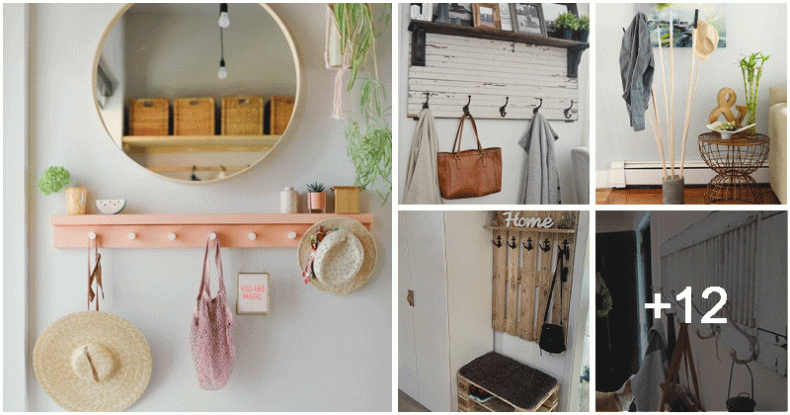
Now that you have your materials and a clear plan, it’s time to bring your entryway coat rack to life! This section focuses on the crucial steps of cutting the wood pieces accurately and assembling them to form the sturdy frame and shelf. Precise measurements and careful execution are key to a professional-looking finished product.
Cutting the Wood Pieces
Accurate cutting is fundamental for a well-constructed coat rack. This section provides the necessary measurements and angles for each component, ensuring a perfect fit and a visually appealing final result. Double-check all measurements before making any cuts.Here’s a breakdown of the wood pieces you’ll need to cut, along with their dimensions:
- Vertical Supports (2 pieces): Length: [Your Chosen Height]
-This will determine the overall height of your coat rack. Consider the height of your shelf and the desired hanging space. For example, if you want a coat rack that is 60 inches tall, these pieces will be 60 inches long. - Horizontal Supports (2 pieces): Length: [Your Chosen Width]
-This will determine the width of your coat rack. Consider the desired length of your shelf and the space available in your entryway. For example, if you want your coat rack to be 36 inches wide, these pieces will be 36 inches long. - Shelf (1 piece): Length: [Your Chosen Width]
-This should be the same length as the horizontal supports. Depth: [Your Chosen Depth]
-Consider the items you plan to store on the shelf. A depth of 8-12 inches is often sufficient. - Optional: Additional Support Pieces (if desired): You may choose to add extra support pieces for increased stability. These could be cut to various sizes depending on your design.
Remember to use a saw appropriate for the type of wood you’re using. A circular saw or miter saw is ideal for straight cuts. Always wear safety glasses and hearing protection when operating power tools.
Assembling the Coat Rack Frame
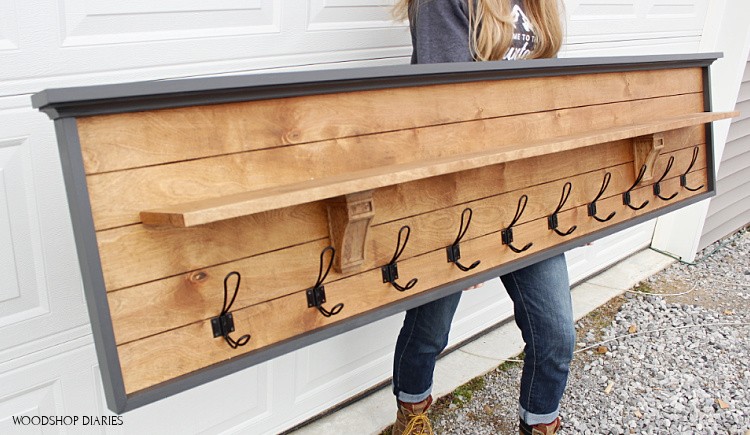
Assembling the frame requires careful alignment and secure joining of the wood pieces. This process ensures the structural integrity of your coat rack.Follow these steps to assemble the frame:
- Prepare the pieces: Ensure all cut edges are smooth and free of splinters. Lightly sand any rough edges.
- Dry Fit: Before applying any adhesive or fasteners, assemble the frame without them. This allows you to check for any misalignments and make necessary adjustments. Place the vertical supports parallel to each other. Position the horizontal supports between the vertical supports, creating a rectangle.
- Apply Adhesive (Optional, but recommended): Apply wood glue to the joining surfaces of the horizontal and vertical supports. This adds extra strength to the joints.
- Attach the Pieces: Use screws or nails to secure the joints. Pre-drilling pilot holes will help prevent the wood from splitting, especially when working with hardwoods.
- Securing the Joints: For added strength, consider using corner brackets or reinforcing the joints with additional wood pieces.
- Check for Squareness: Use a carpenter’s square to ensure the frame is square. If it’s not, make adjustments until it is. This is crucial for a stable and visually appealing coat rack.
- Let the Glue Dry: If you used wood glue, allow it to dry completely according to the manufacturer’s instructions before proceeding.
A visual guide for the assembly process could be represented as follows:* Step 1: A diagram shows two vertical wooden pieces standing upright, parallel to each other.
Step 2
A diagram shows two horizontal wooden pieces being positioned between the vertical pieces, forming a rectangle. The horizontal pieces are flush with the top and bottom edges of the vertical pieces.
Step 3
A diagram shows wood glue being applied to the joining surfaces of the horizontal and vertical pieces.
Step 4
A diagram shows screws being driven into the corners of the frame, securing the horizontal and vertical pieces together.
Step 5
A diagram illustrates the use of a carpenter’s square to ensure the frame is perfectly square.
Attaching the Shelf to the Frame
Attaching the shelf to the frame completes the coat rack. There are several methods for attaching the shelf, each with its own advantages. Choose the method that best suits your needs and the design of your coat rack.Here are some common mounting methods:
- Using Shelf Brackets: This is a simple and reliable method. Attach shelf brackets to the vertical supports at the desired height for the shelf. Then, place the shelf on top of the brackets and secure it with screws.
- Using Screws Directly: If the shelf is made of thick wood, you can screw it directly to the horizontal supports. Pre-drill pilot holes to prevent splitting. Make sure the screws are long enough to provide adequate support but not so long that they go through the shelf.
- Using Pocket Hole Screws: Pocket hole joinery creates strong and hidden joints. Drill pocket holes in the underside of the shelf and the horizontal supports. Then, use pocket hole screws to join the shelf to the frame.
- Recessing the Shelf: If you want the shelf to sit flush within the frame, you can create a groove (using a router or by carefully joining smaller pieces of wood) along the inside of the vertical supports to accommodate the shelf. The shelf then slides into this groove and can be secured with screws or adhesive.
Consider the weight the shelf will need to support and choose a mounting method that provides sufficient strength. For heavier items, use more robust brackets or a combination of methods.
Hook and Shelf Installation
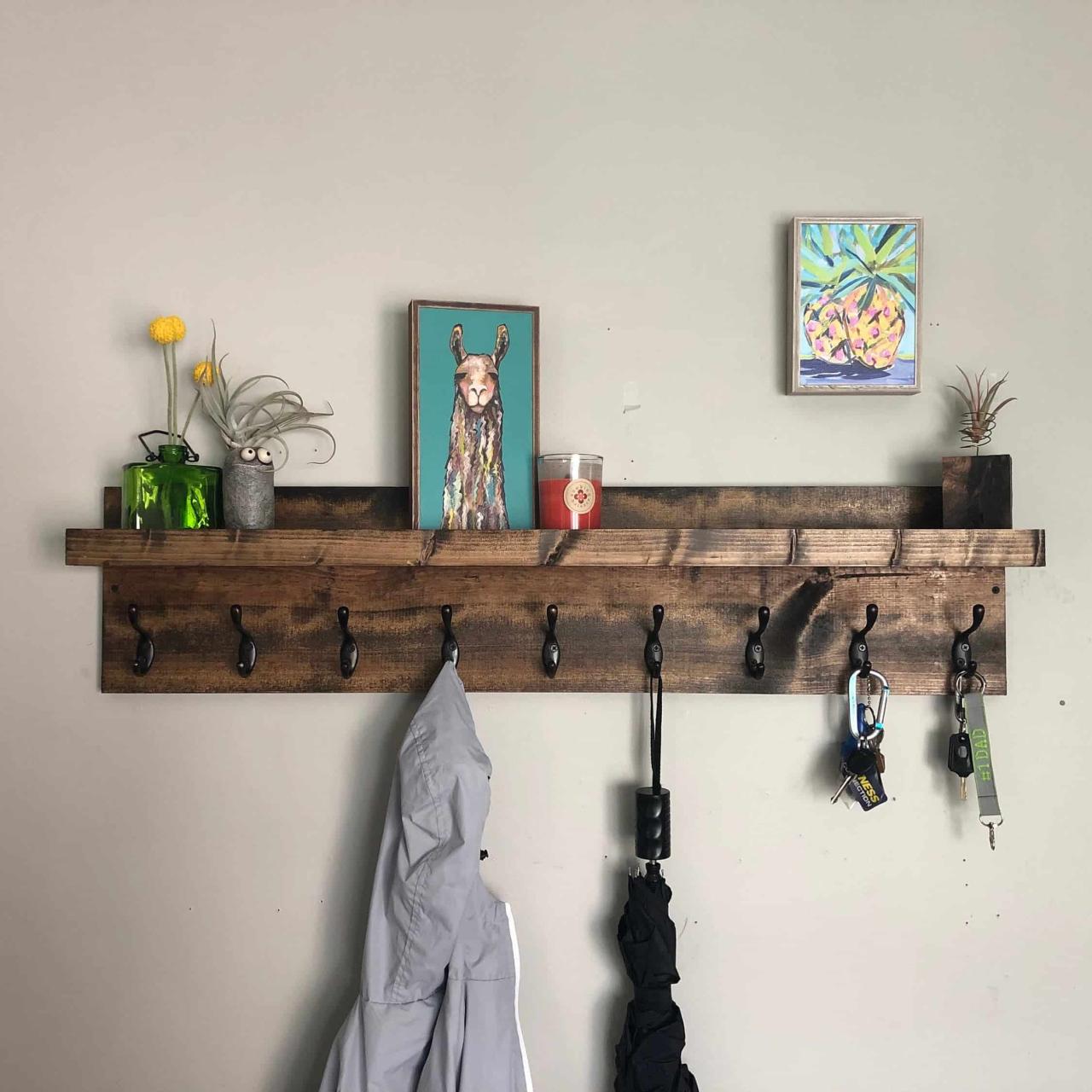
Now that your coat rack frame is assembled, it’s time to install the hooks and the shelf. This step adds the functionality and final aesthetic touch to your project. Careful installation ensures both the usability and the structural integrity of your entryway organizer.
Hook Installation
Installing the hooks correctly is crucial for the coat rack’s functionality and appearance. The spacing and height of the hooks determine how accessible and practical the rack will be.To begin, determine the desired number of hooks and their arrangement along the face of your coat rack. Consider the width of the rack and the size of the hooks. You want enough space between hooks to prevent overcrowding and allow for easy access to each item.
Generally, a spacing of 6-8 inches between hooks is a good starting point, but this can be adjusted based on the hook style and the anticipated items to be hung.The optimal height for hook placement depends on the users. The goal is to make the hooks accessible to everyone who will be using the coat rack.To determine the ideal hook height, consider the following:
- Adults: The average adult can comfortably reach items at a height of 60-70 inches from the floor.
- Children: For families with children, consider adding a lower row of hooks at a height of 48-54 inches. This allows children to independently hang their coats and backpacks.
- Wheelchair Users: Ensure that hooks are placed within an accessible reach range, generally between 34 and 48 inches from the floor. This is in accordance with ADA (Americans with Disabilities Act) guidelines.
Once you have determined the spacing and height, mark the locations for the hooks on the coat rack. Use a level to ensure that the hooks are aligned horizontally.Next, attach the hooks to the coat rack frame. The attachment method will depend on the type of hooks you have chosen. The most common methods involve screws.
- Pre-drilling: Before inserting the screws, pre-drill pilot holes using a drill bit slightly smaller than the diameter of the screw threads. This prevents the wood from splitting and makes it easier to drive the screws in straight.
- Screw Length: Choose screws that are long enough to securely anchor the hooks to the frame, but not so long that they protrude through the back of the wood.
- Tightening: Tighten the screws until the hooks are firmly secured. Be careful not to overtighten, as this could damage the wood or strip the screw holes.
Here are some examples of different hook styles and their pros and cons:
- Single Hooks:
- Pros: Simple, versatile, and can accommodate various items.
- Cons: May not be ideal for multiple items or bulky coats.
- Double Hooks:
- Pros: Offer more hanging space in a compact design.
- Cons: Can look cluttered if too many items are hung on them.
- Coat Racks with Shelves:
- Pros: Provide storage for hats, gloves, and other accessories.
- Cons: Can be more complex to install.
- Decorative Hooks:
- Pros: Add a stylish touch to the coat rack.
- Cons: May be less sturdy or suitable for heavy items.
Shelf Installation
The shelf adds both storage and visual appeal to your coat rack. The process involves securely attaching the shelf to the frame, ensuring it can support the intended weight.Before securing the shelf, determine its position on the coat rack. Consider the desired height and whether you want the shelf to be flush with the top of the frame, recessed, or projecting outwards.There are several methods to secure the shelf.
- Using Screws:
- Procedure: Drill pilot holes through the shelf and into the frame supports. Use wood screws to attach the shelf.
- Considerations: Ensure screws are long enough to provide a secure hold, but not so long they protrude through the shelf or the frame.
- Using Shelf Brackets:
- Procedure: Attach shelf brackets to the frame and then place the shelf on top of the brackets.
- Considerations: This method provides additional support and is recommended for heavier items. Choose brackets that are appropriately sized for the shelf and the anticipated weight.
- Using Dowels (for a more concealed look):
- Procedure: Drill holes in the frame and the shelf to insert dowels. Apply wood glue to the dowels and the holes before inserting them.
- Considerations: This method provides a clean look, but it requires precise measurements and alignment.
Regardless of the chosen method, ensure that the shelf is level before securing it. Use a level to check the alignment and make any necessary adjustments. Once the shelf is in place, double-check the screws or brackets to make sure they are tight and secure. For added strength, consider using wood glue in addition to screws or brackets. This will help to create a stronger bond between the shelf and the frame.
Finishing and Aesthetics
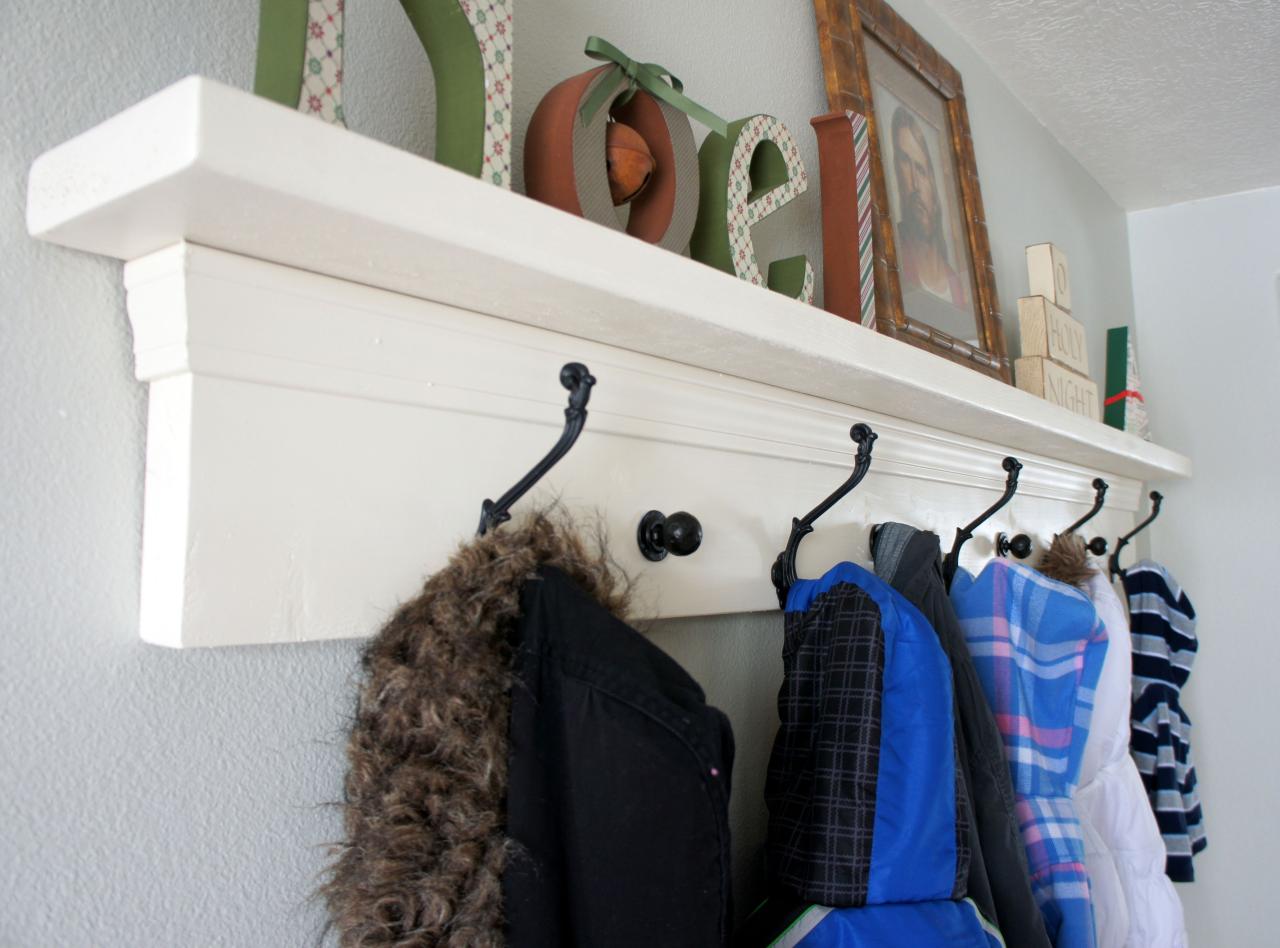
Now that your coat rack is assembled, it’s time to give it that polished look and protect it for years to come. This section will guide you through the finishing process, ensuring your entryway piece is both beautiful and durable.
Sanding Wood Surfaces
Sanding is crucial for a smooth and professional finish. It prepares the wood for paint, stain, or sealant, ensuring optimal adhesion and appearance.To begin, start with a medium-grit sandpaper (around 120-grit) to remove any imperfections, such as splinters or glue residue. Sand with the grain of the wood, using long, even strokes. Once the surface feels relatively smooth, switch to a finer grit sandpaper (220-grit is usually sufficient) to refine the finish.Remember to wear a dust mask and eye protection during sanding.
Also, wipe away the sanding dust with a tack cloth after each sanding session. This helps prevent the dust from interfering with the finish.
Applying Paint, Stain, or Sealant
Choosing the right finish depends on the desired look and the level of protection needed. Here’s a breakdown of the application process for each option:* Paint: 1. Clean the surface thoroughly. 2. Apply a primer if necessary, especially on bare wood.
This improves paint adhesion and helps create a more even finish. 3. Apply two or more thin coats of paint, allowing each coat to dry completely before applying the next. Use a brush, roller, or spray gun, depending on the desired finish and your preference.
Stain
1. Prepare the wood by sanding it to a smooth finish. 2. Apply the stain evenly, following the wood grain. 3.
Wipe away any excess stain after the recommended time (usually a few minutes). The longer the stain sits, the darker the color. 4. Allow the stain to dry completely. 5.
Apply a clear sealant (like polyurethane) to protect the stain and wood.
Sealant
1. Ensure the wood is clean and dry. 2. Apply the sealant according to the manufacturer’s instructions. 3.
Multiple thin coats are generally better than one thick coat. Allow each coat to dry completely before applying the next.Always read and follow the manufacturer’s instructions for any finish you choose. Proper application is key to achieving a beautiful and long-lasting result.
Customizing with Decorative Elements
Personalize your coat rack to match your style. Consider these creative ideas:* Stencils: Use stencils to add patterns, words, or designs. Secure the stencil to the surface and apply paint with a brush or sponge.
Embellishments
Attach decorative knobs, hooks, or trim pieces to the wood.
Color Blocking
Paint different sections of the coat rack in contrasting colors.
Distressing
Create a weathered look by lightly sanding the edges and corners after painting.
Decals
Apply vinyl decals for a quick and easy way to add visual interest.
Finishing Options
Choosing the right finish involves considering the appearance, durability, and application method. The following table summarizes some common finishing options:
| Finish | Appearance | Durability | Application Method |
|---|---|---|---|
| Paint | Wide range of colors and sheens (matte, satin, semi-gloss, gloss) | Moderate to high, depending on the paint type | Brush, roller, spray gun |
| Stain | Enhances the wood grain, available in various colors | Moderate, requires a sealant for protection | Brush, wipe-on |
| Polyurethane (Sealant) | Clear, protects the wood, available in various sheens | High, provides excellent protection against scratches and water damage | Brush, spray gun |
| Oil-Based Finish | Enhances the wood grain, provides a warm glow | Moderate, requires multiple coats and can take a long time to dry | Brush, wipe-on |
Mounting and Installation
Now that your entryway coat rack is assembled and finished, the final step is securely mounting it to your wall. Proper installation is crucial for both the functionality and safety of your coat rack. This section will guide you through the process, ensuring your coat rack is level, stable, and ready to hold your coats, hats, and bags.
Wall Anchors and Their Application
The type of wall anchors you use will depend on the material of your wall. Incorrect anchor selection can lead to a wobbly rack, or worse, the rack falling off the wall. Understanding the different types and their applications is essential.
- Drywall: Drywall is a common wall material, and it requires specific anchors designed to hold weight within the gypsum board. Consider these options:
- Plastic Expansion Anchors: These are a budget-friendly option suitable for lighter loads. Drill a pilot hole, insert the anchor, and then screw in the mounting screws.
- Toggle Bolts: Toggle bolts provide a secure hold and are ideal for heavier loads. They work by expanding behind the drywall. You’ll need to drill a hole large enough for the toggle to pass through. Once behind the wall, the toggle springs open, distributing the weight.
- Self-Drilling Drywall Anchors: These anchors are easy to install as they drill directly into the drywall with a screw. They are suitable for medium-weight applications.
- Concrete or Brick: These solid wall materials require different anchors designed to grip into the dense surface.
- Concrete Anchors: These are designed to be hammered into a pre-drilled hole. Use a hammer drill to create the hole. The anchor expands as the screw is tightened.
- Lead Anchors: These are suitable for brick and older concrete walls. They are inserted into a pre-drilled hole and expand when a screw is driven into them.
- Wood Studs: Mounting directly into wall studs provides the most secure hold. Use wood screws long enough to penetrate the stud at least 1.5 inches.
Leveling the Coat Rack
Ensuring your coat rack is level is crucial for aesthetics and functionality. A crooked rack is both unsightly and can cause items to slide off.
- Use a Level: Place a level on top of the coat rack, ensuring it spans the entire length.
- Mark the Mounting Points: With the rack held against the wall in the desired location, use a pencil to mark the points where you will insert the screws. Ensure these points align with the wall studs or are positioned where anchors will be installed.
- Adjust as Needed: If the rack isn’t level, adjust the position slightly, using shims behind the rack if necessary to compensate for any unevenness in the wall. Re-check with the level after each adjustment.
Using a Stud Finder
Finding wall studs is paramount for a secure installation, especially when dealing with heavier items. Wall studs are the vertical wooden supports behind the drywall, providing a solid foundation for mounting.
- Types of Stud Finders: Stud finders use different technologies, including magnetic, edge-finding, and center-finding.
- Using a Stud Finder: Follow the manufacturer’s instructions for your specific stud finder. Typically, you will calibrate the device against the wall and then slowly move it across the surface. The stud finder will indicate when it detects a stud. Mark the edges and the center of each stud with a pencil.
- Importance of Studs: Mounting into studs distributes the weight of the coat rack and its contents across a stronger support system, increasing the rack’s stability and preventing it from pulling away from the wall. If a stud cannot be located, using appropriate anchors is vital.
Troubleshooting Installation Problems
Even with careful planning, installation problems can arise. Here’s a guide to troubleshoot common issues.
- The Coat Rack is Not Level: Double-check your measurements. Use shims to compensate for any unevenness. Ensure the level is accurate.
- The Anchors are Not Holding: If using drywall anchors, ensure you have selected the appropriate type for the weight of your rack and its contents. If the anchor pulls out, consider using a different type or moving the mounting point to a stud. For concrete or brick, verify that the holes are the correct size and that the anchors are properly seated.
- The Screws are Stripping: If the screw holes are too large, use a larger screw or fill the hole with wood filler and re-drill.
- The Coat Rack Feels Unstable: Check the screws and anchors. Tighten the screws or replace the anchors with a more robust type. Ensure you have mounted into studs if possible.
Closing Summary
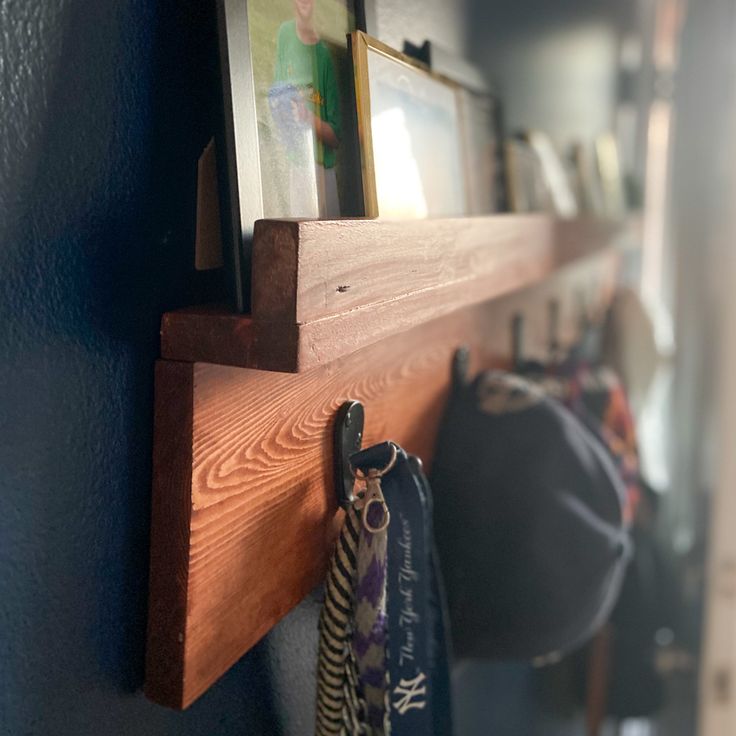
Congratulations! You’ve successfully navigated the journey of building your own entryway coat rack with a shelf. From initial design to final installation, you’ve gained valuable skills and created a practical and personalized piece for your home. Remember the satisfaction of a job well done, the pride of a custom creation, and the welcoming touch it adds to your entryway. Enjoy your new coat rack, and let it be a testament to your DIY spirit!